
Mangrove Conservation
Spatial patterns and drivers of mangrove loss on Panama's central Caribbean coast: a baseline guide for management and conservation
Project description
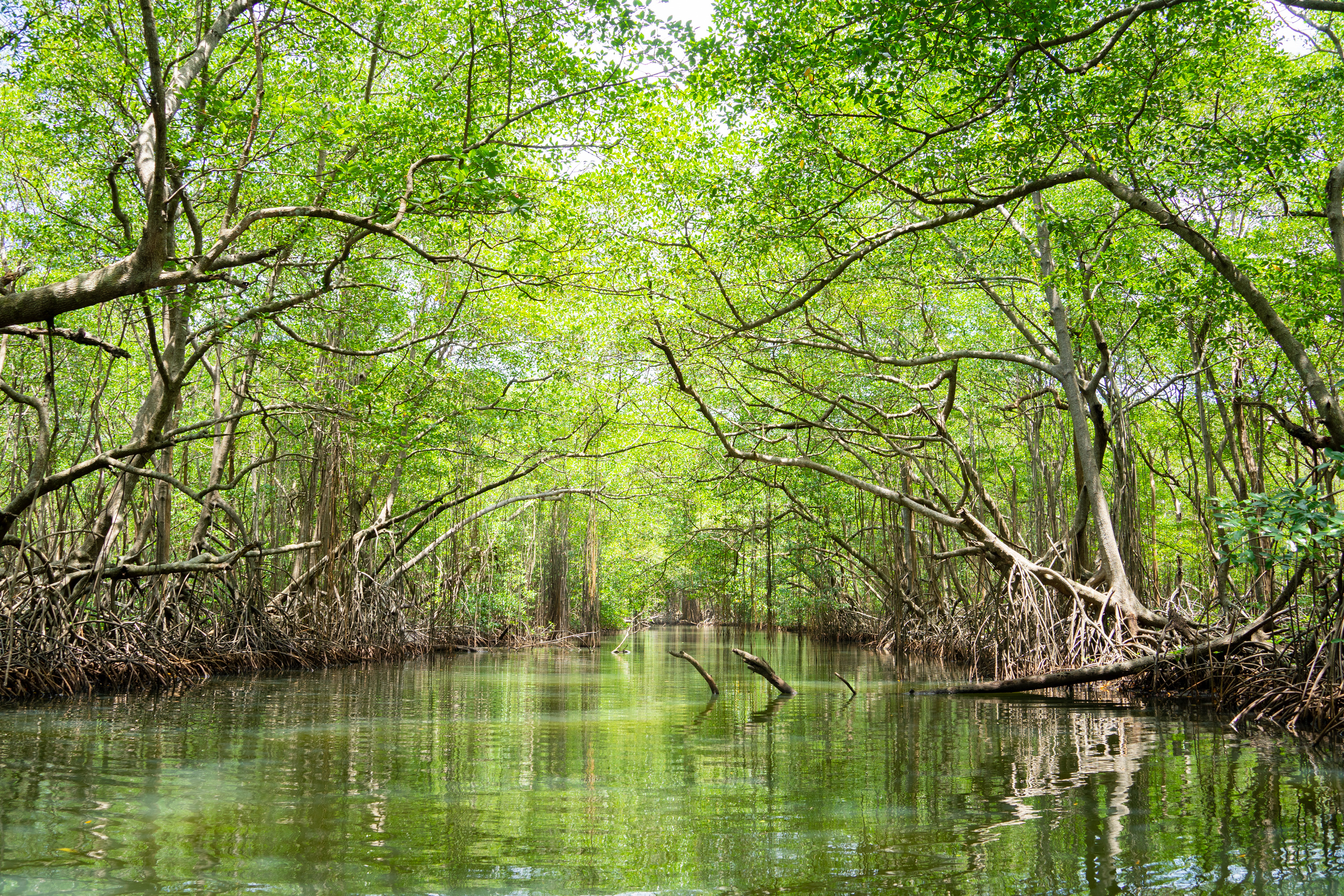
Mangroves are extremely important because they provide a wide variety of ecosystem services.
Despite these benefits, these ecosystems are increasingly threatened, in part by human activities.
This highlights the need to understand the drivers of mangrove loss to implement better conservation
strategies in order to maintain the goods and services provided by these ecosystems. Using a variety of
tools—including Landsat images, satellite environmental data, and spatial models—this research seeks to
identify natural and anthropogenic drivers of changes in mangrove cover in the central Caribbean of Panama.
Furthermore, the study intends to assess the vulnerability of mangrove ecosystems to each threat and investigate
strategies for prioritizing conservation efforts. The findings of this research are expected to have implications for the management and conservation of mangrove ecosystems.
PRISM project leader: Jorge Manuel Morales-Saldaña
Collaborators:
Nathalia Tejedor (Universidad Tecnológica de Panamá), Jorge Castillo (Universidad Autónoma de Chiriquí), Sandy Mosquera (Centro Regional Ramsar para la Capacitación e Investigación sobre Humedales para el Hemisferio Occidental), Hector Guzman (STRI), Noah Wightman (McGill), Jorge Hoyos-Santillan (University of Eastern Finland)
Publications: Hoyos-Santillan, J., Chavarría, J., Castillo-Bethancourt, L. M., Vargas, J. E., Sanjur, A., Morales, J., Leung, B., Candanedo, I., Ibáñez, A., Manzane-Pinzon, E., González-Mahecha, E., Mola-Yudego, B. 2025. Soil carbon stock densities in mangrove and forested wetland ecosystems of
Panama. Scientific Data.
https://doi.org/10.1038/s41597-025-05877-x.