
About Us
PRISM — Panama Research and Integrated Sustainability Model
UNESCO Chair for Dialogues on Sustainability:
-

-
Brian Leung
brian.leung2@mcgill.ca
PRISM is led by Brian Leung— associate professor in the Department of Biology and the Bieler School of Environment at McGill University. His research focuses on 1) large-scale ecological predictions, and 2) environmental decision-making. He is focusing on the development of PRISM as a concrete tool for forecasting, evidence-based decision making, education and outreach geared towards sustainability. He is also director of the McGill-STRI Neotropical Environment Option (NEO).
Click here to watch Dr. Leung give an overview of the PRISM project at the APANAC (Asociación Panameña para el avance de la ciencia) symposium, in 2021.
Team:
-
-
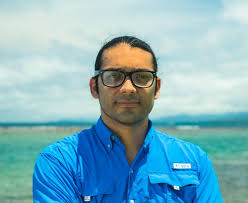
Jorge Manuel Morales-Saldaña
jorge.morales@mail.mcgill.ca
Jorge is a Ph.D. student in the Biology Department at McGill University, in the Neotropical Environmental Option (NEO) program. Broadly, he is interested in the conservation of coastal marine ecosystems. His Ph.D. focuses on mangrove ecosystems, which are one of the most valuable coastal habitats in the provision of multiple ecosystem services such as fisheries, coastal erosion control, and cultural values. His studies are primarily conducted in Panama, where the effects of different anthropogenic impacts and climate change on mangroves are evident.
-

-
Andrew Sellers
Andrew earned his Ph.D. from McGill University, and is currently a postdoc in the O’dea lab at the Smithsonian Tropical Institute in Panama. As a marine ecologist, he studies how marine predators and herbivores shape coastal ecosystems, and how those species interactions are influenced by changes in environmental conditions imposed by oceanographic processes.
-
-
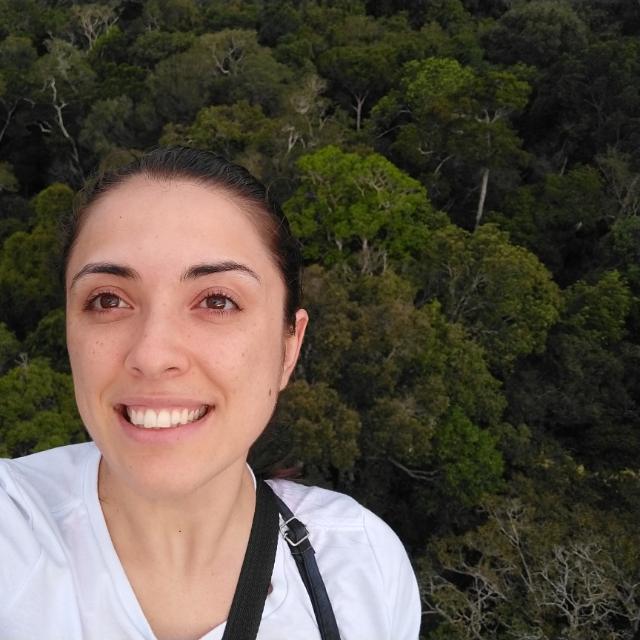
Ana Catarina Avila Vitorino
ana.avila@mail.mcgill.ca
Ana is a Ph.D. student at McGill University, co-supervised by Dr. Fiona Soper and Dr. Brian Leung. Her research focuses on tropical forests, which play an important role as biodiversity hotspots and carbon sinks. Tropical forests are currently facing serious threats, one of the most important being the expansion of industrial agriculture. During her Ph.D., Ana has been studying agricultural practices in Panama (and around the world) to see how they impact the recovery of rainforests after land abandonment.
-

-
Shriram Varadarajan
shriram.varadarajan@mail.mcgill.ca
Shriram completed a B.Sc. at McGill University, and is currently pursuing a Ph.D. at this same institution. Shriram is working on hydrological modeling in Panama, in relation to integrated sustainability modeling under climate change scenarios. Currently, he is also working on developing novel approaches to ecological movement and connectivity models.
-

-
Jade Aitken
jade.aitken@mail.mcgill.ca
Jade completed a B.Sc. in Natural Resources, Conservation, and Foresty at the University of British Columbia, and is currently completing an M.Sc. at McGill University in the Leung Lab. She is working on a social, economical, and ecogical model related to mining and agriculture in Panama.
-

-
Isabella Serrette
isabella.serrette@mail.mcgill.ca
Isabella was born and raised in Barbados and completed a B.Sc. in Environmental Science at the University of the West Indies. She is currently doing an M.Sc. in the Leung Lab, which focuses on the distribution and community structure of soil faunal biodiversity in the Caribbean.
-

-
Sami Sugiarta
sami.sugiarta@mail.mcgill.ca
Sami has a background in Environment and Computer Science, and is a research assistant helping to develop PRISM.
-

-
Marie Pyun
marie.pyun@mail.mcgill.ca
Marie has a background in Biology and Mathematics and currently serves as a research assistant supporting the development of PRISM.
-

-
Samantha McKay
samantha.mckay@mail.mcgill.ca
Samantha is an undergraduate student pursuing a Bachelor of Science in Environment, with a concentration in Biodiversity and Conservation, at the McGill Bieler School of Environment. She is currently working as a research assistant supporting the development of PRISM.
Context: McGill in Panama
Figure: Panama Canal seen from Barrado Colorado Island
The Panama Research and Integrated Sustainability Model (PRISM) emerges from long-standing partnerships between McGill University and institutions in Panama, and matches McGill's commitment to sustainability (Vision 2020). Over the past 24 years, McGill programs - the Panama Field Study Semester (PFSS), Neotropical Environment Option (NEO), and NSERC CREATE Biodiversity, Ecosystem Services, Sustainability (BESS) program - have trained >500 undergraduates (>50 from Panama) and ~100 graduate students, with one-third from Latin American Countries. We have over 40 McGill faculty members as part of our McGill-Panama programs, across seven departments and four faculties.

Panama is an exemplar of sustainability issues in the Global South. It is characterized by rapid economic growth (10.6% in 2011) and population growth
(>40% by 2050), has a highly skewed wealth distribution (17/136 in the world), is a hub of international shipping traffic (Panama Canal), and is a hotspot
of biodiversity. Panama therefore faces difficult choices regarding how to best to balance the sustainability of the country's natural assets (e.g., forested land,
water basins, biodiversity) with its economic interests. To develop resilient policies, it is critical to understand how alternative development trajectories will
have ramifications for water use, the canal watershed, protection of forests, indigenous peoples, and agriculture, particularly given changing climates and environmental conditions.
Vision Statement
The development of sustainability tools and their application to current conservation issues located in the Global South is a critical endeavor - the Global South houses most of Earth’s biodiversity, and will be more affected by environmental impacts such as climate change, yet most data occur in the Global North. These ongoing environmental changes could have wide-ranging consequences for societal welfare, with effects on trade, migration, land-use patterns, resource use, and sustainability of socio-ecological systems, within which countries in the Global South may be particularly vulnerable. Clearly, we must think beyond our national borders, in considering some of the most pressing environmental challenges, and the social context in which they occur.
North-South partnerships are key, and we can build on the relationships developed over decades in Panama, with a long-term vision to expand our tools and expertise to Central and South America and beyond. Thus, we focus on Panama as a template for sustainability science at the national scale, one which partners international researchers with researchers from Panama, to ensure that the outcomes of PRISM help meet the goals of Panamanian stakeholders, improving long-term welfare and livelihoods.
PRISM is a countrywide spatially-explicit computational model, which we envisage will form the basis for wide-ranging analyses geared towards sustainability, some of which can be found on our Projects page. PRISM will incorporate social, environmental and economic dimensions across space and time. Thus, PRISM will be true to a fundamental tenet of sustainability by treating these as dynamic interacting entities that cannot be viewed in isolation. We envisage PRISM as a platform to explore interactions between diverse research across disciplines, to engage communities and to facilitate evidence-based decision-making. Thus, PRISM will serve the research community, stakeholders, and policy makers interested in sustainability questions.
Over the longer time-horizon, we envisage PRISM to become self-perpetuating, comprised of a network of international and Panamanian researchers, taking ownership of the platform and providing substantial human capital and multidisciplinary expertise. In this way, we envisage that PRISM will evolve as a continually-improving, open-source platform for sustainability science.